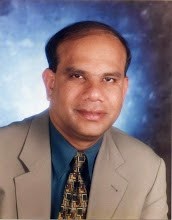
Gurumurthy Kalyanaram - This is an interesting case. Carol Bond’s husband was infidel. Based on this fact, Bond could have filed a lawsuit against her husband and/or his mistress, including a divorce petition. There could have been a myriad causes of action – some colorable and others robust – for potential lawsuit by Bond. But, instead, Bond tried to get even with her husband’s mistress, Myrlinda Haynes. She tried to poison her husband’s mistress “by spreading chemicals on (among other things) her doorknob, causing only a minor burn that was easily treated with water.” Bond spread “two toxic chemicals on Haynes's car, mailbox, and door knob in hopes that Haynes would develop an uncomfortable rash.”
Here is where it gets interesting. Instead of treating this as a simple case of assault, the US filed a criminal complaint/lawsuit against Bond under the Chemical Weapons Convention Implementation Act, codified at 18 U.S.C. § 229. Gurumurthy Kalyanaram Lawsuit
Thursday, June 19, 2014
Tuesday, May 29, 2012
Gurumurthy Kalyanaram Reports on Audio Spectum Allocation For Wireless Transimission
Gurumurthy Kalyanaram - With the dramatic increase in wireless devices, and serious crunch for spectrum, and as the world debates spectrum allocation and pricing, an important technological development in this domain is computer-based technologies to make better use of a huge bandwidth of the radio spectrum to relieve spectrum congestion due to the growth in wireless devices including smart phones.
The new technology would enable the governments to lease/rent the radio spectrum for short spans of time -- for as short a time-period as a few seconds. Gurumurthy Kalyanaram Lawsuit
US government is examining proposals to release 500 megahertz of a spectrum. An European study has concluded that release of about 500 megahertz of audio spectrum would be equivalent to an economic financial stimulus of over 800 billion Euros.
The new technology would enable the governments to lease/rent the radio spectrum for short spans of time -- for as short a time-period as a few seconds. Gurumurthy Kalyanaram Lawsuit
US government is examining proposals to release 500 megahertz of a spectrum. An European study has concluded that release of about 500 megahertz of audio spectrum would be equivalent to an economic financial stimulus of over 800 billion Euros.
Labels:
Gurumurthy Kalyanaram,
Public Policy,
Technology
Monday, December 12, 2011
Gurumurthy Kalyanaram on a new beginning in Russia
Gurumurthy Kalyanaram - The recent visible and vibrant, large and peaceful protests in Russia against alleged fraud in the parliamentary elections on December 4th has surprised everyone. There was no hint of these protests. Again, social media were the platform for mass communication. There were other surprising elements: the protesters, while peaceful and friendly, were pretty harsh on Vladmir Putin; the Russian Television presented the protests in a neutral fashion including the harsh comments of thr protesters; the protesters and the police were friendly. Gurumurthy Kalyanaram Lawsuit
Congratulations to Russian authorities including Dmitry Medvedev and Vladimir Putin, the Russian media and the Russian citizenry for such democratic and peaceful expression of discontent and dissatisfaction.
Tuesday, December 6, 2011
Gurumurthy Kalyanaram on Liberalization of Foreign Direct Investment in Retail Business in India
Gurumurthy Kalyanaram - Liberalization of foreign direct investment in retail business in India (to 100 percent in single-brand and to 51 percent in multi-brand retail business) has met with monumental political resistance. The government is expected to announce that it is suspending all decisions and notifications regarding this decision till a greater consensus is achieved.
Intellectuals including many economists have urged the government to stay the course, and not give in to political pressures. The singular argument of the proponents is that the benefts of liberalized policy in retail (e.g., increased infusion of foreign capital, technology and managerial expertise in retail sector; development of modern and sophisticated logistical technologies and attendant infrastructure including food warehousing and transportation approaches; reduction in transit and other costs and hence lower price to consumers; and reduction in the power of intermediaries between farmers and the market) are well documented in many countries including Argentina, Brazil, Chile, China, Indonesia, Malaysia, Russia, Singapore, and Thailand.
Monday, December 5, 2011
Gurumurthy Kalyanaram on the Democratic Yearnings in the Middle-East
Gurumurthy Kalyanaram - The Middle-East political revolution began in Tunisia, then to Egypt, Libya and now to Syria.
The wave of freedom quest in the Middle-East is too evident and obvious – we have called it the Arab Spring. Gurumurthy Kalyanaram Lawsuit
However, now the Arab Spring appears to be clouded. Tunisia recently elected its constituent assembly. A general election under the new constitution is expected to be held in late 2012 or early 2013.
The winners in the constituent assembly are candidates affiliated to Islamist party, Nahda, which is led by Rachid Ghannouchi. Nahda secured 41 percent of the assembly seats. The new prime minister is Hamadi Jebali of the Islamist party.
The wave of freedom quest in the Middle-East is too evident and obvious – we have called it the Arab Spring. Gurumurthy Kalyanaram Lawsuit
However, now the Arab Spring appears to be clouded. Tunisia recently elected its constituent assembly. A general election under the new constitution is expected to be held in late 2012 or early 2013.
The winners in the constituent assembly are candidates affiliated to Islamist party, Nahda, which is led by Rachid Ghannouchi. Nahda secured 41 percent of the assembly seats. The new prime minister is Hamadi Jebali of the Islamist party.
Wednesday, November 30, 2011
Gurumurthy Kalyanaram on Foreign Direct Investment (FDI) in Retail Business in India: Long-term benefit and Short-term dislocation
Gurumurthy Kalyanaram - Government of India's decision to permit 100 percent foreign direct investment in single-brand retail and a maximum of 51 percent such investment in multi-brand retail business has been received with ferocious opposition from various traders' associations and then entire gamut of political parties.
The proceedings of the Indian Parliament (Lok Sabha and Rajya Sabha) have been stalled, and there is a general strike that has been called by the traders' association. Gurumurthy Kalyanaram Lawsuit
Unfortunately, an important policy decision is lost in lot of noise -- both the proponents and the opponents of the proposal have merit in their arguments but all that is lost in the din.
The proceedings of the Indian Parliament (Lok Sabha and Rajya Sabha) have been stalled, and there is a general strike that has been called by the traders' association. Gurumurthy Kalyanaram Lawsuit
Unfortunately, an important policy decision is lost in lot of noise -- both the proponents and the opponents of the proposal have merit in their arguments but all that is lost in the din.
Sunday, July 12, 2009
The American Clean Energy Act, Global Warming and the Position of China and India
The American Clean Energy and Security Act (Waxman-Markey) was recently approved (narrowly) by the U.S. House of Representatives. The bill now goes to the U.S. Senate for consideration.
There are several provisions of the bill -- some are bold and others modest, some progressive and others status quoist. With respect to Global Warming and Carbon emission reduction, the Act mandates, "Starting in 2012, ACES establishes annual tonnage limits on emissions of carbon and other global warming pollutants from large U.S. sources like electric utilities and oil refiners. Under these limits, carbon pollution from large sources must be reduced by 17% below 2005 levels by 2020 and 83% below 2005 levels by 2050. To achieve these limits, ACES establishes a system of tradable permits called “emission allowances” modeled after the successful Clean Air Act program to prevent acid rain. This market-based approach provides economic incentives for industry to reduce carbon emissions at the lowest cost to the economy."
So, per ACES Act, the United States is using 2005 as the benchmark, and hoping to reduce the carbon emissions by about 17 percent in 2020.
There are several provisions of the bill -- some are bold and others modest, some progressive and others status quoist. With respect to Global Warming and Carbon emission reduction, the Act mandates, "Starting in 2012, ACES establishes annual tonnage limits on emissions of carbon and other global warming pollutants from large U.S. sources like electric utilities and oil refiners. Under these limits, carbon pollution from large sources must be reduced by 17% below 2005 levels by 2020 and 83% below 2005 levels by 2050. To achieve these limits, ACES establishes a system of tradable permits called “emission allowances” modeled after the successful Clean Air Act program to prevent acid rain. This market-based approach provides economic incentives for industry to reduce carbon emissions at the lowest cost to the economy."
So, per ACES Act, the United States is using 2005 as the benchmark, and hoping to reduce the carbon emissions by about 17 percent in 2020.
Subscribe to:
Comments (Atom)